
Therapy Services
Trauma-informed therapy for adults in Washington State
People seek therapy for many reasons — sometimes because something specific has happened, and sometimes because their system has been holding too much for too long.
My work focuses on helping you feel safer in your body, more supported in relationships, and better able to meet life with clarity and choice. Therapy is collaborative and paced with care, honoring both your story and your nervous system.
Rather than treating problems as isolated symptoms, I work with how experiences are held in the body, emotions, and relationships. Some of the areas I commonly support include:
Trauma & Chronic Stress
Trauma isn’t only about what happened — it’s also about how your nervous system adapted to survive.
You may notice:
Feeling on edge, numb, or easily overwhelmed
Difficulty relaxing or feeling safe
Strong reactions that seem to come “out of nowhere”
A sense of being stuck or shut down
Using approaches such as Sensorimotor Psychotherapy and Deep Brain Reorienting, we gently work with the body’s responses to threat and shock, allowing unfinished protective responses to resolve over time — without forcing or re-experiencing.
Anxiety, Overwhelm & Nervous System Dysregulation
Anxiety often reflects a nervous system that has learned to stay alert for good reason.
In our work together, we focus on:
Increasing regulation and capacity
Understanding what your anxiety is protecting you from
Developing tools that support steadiness rather than control
Grounded in Polyvagal Theory, this work supports your system in finding more ease, flexibility, and connection.
Attachment & Relationship Concerns
Our early relationships shape how we connect, protect ourselves, and respond to closeness or conflict.
You may be noticing:
Patterns of withdrawal, people-pleasing, or fear of abandonment
Difficulty trusting others or yourself
Repeated relationship struggles
Using attachment-informed therapy, we explore these patterns with curiosity and compassion, helping you develop greater security — both within yourself and in your relationships.
Burnout, Caregiving Stress & Life Transitions
Periods of transition, loss, or long-term responsibility can quietly tax the nervous system.
Therapy can help you:
Reconnect with your needs and limits
Process accumulated stress
Find steadier footing during change
Feel more present and resourced
This work honors the impact of what you’ve been carrying, even if it hasn’t always been visible to others.
Areas of Focus
Sessions are collaborative, relational, and body-aware. We pay attention not only to thoughts and emotions, but also to physical sensations, impulses, and shifts in the present moment.
I prioritize:
Safety and consent
A pace that feels manageable
Transparency about the process
Respect for your boundaries and autonomy
Therapy is not about fixing you — it’s about creating the conditions where your system can settle and healing can unfold naturally.
How Therapy Works


Modalities

Deep Brain Reorienting (DBR) is a trauma-focused therapy that works with the body’s earliest responses to shock and threat. Rather than focusing on detailed memories or retelling painful experiences, DBR gently supports the nervous system in processing what happened at a very foundational level.
When something overwhelming occurs, the brain and body often react before we can think, speak, or make sense of what’s happening. These early survival responses — orienting, bracing, freezing — can remain unfinished, leaving the nervous system stuck in patterns of alarm, shutdown, or hypervigilance.
DBR helps bring careful attention to these early bodily signals, allowing the nervous system to complete what was interrupted. This can lead to a natural settling of threat responses, often without needing to relive the trauma or go into extensive narrative detail.

Sensorimotor Psychotherapy is a body-centered approach to therapy that recognizes how experiences — especially overwhelming or traumatic ones — are held not only in thoughts and emotions, but also in the body. Rather than focusing primarily on talking through the past, this approach gently brings attention to present-moment bodily sensations, movements, and nervous system responses. By working with these physical signals in a careful, supported way, people can develop greater regulation, awareness, and choice, allowing patterns shaped by past experiences to soften and change over time.

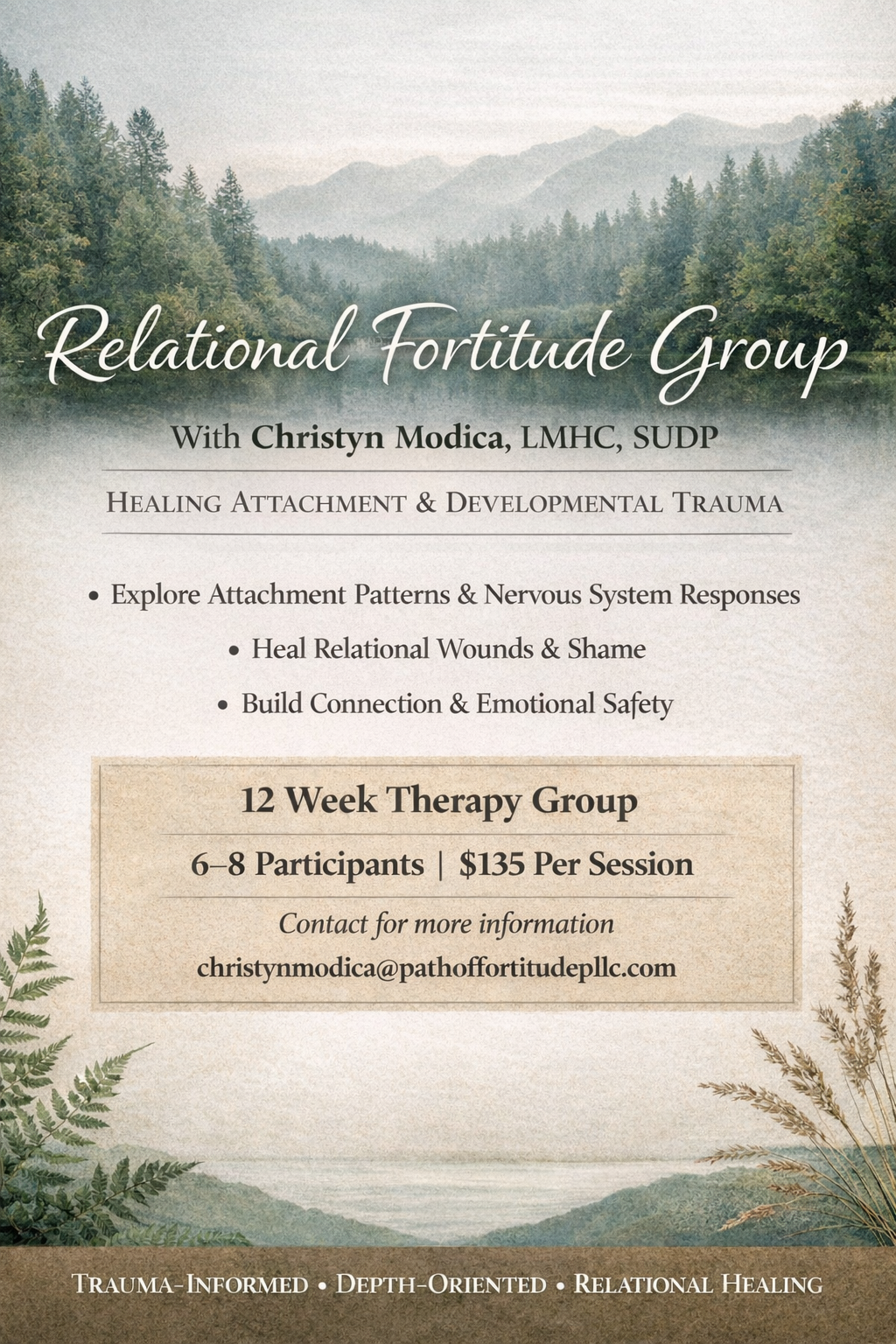
I offer trauma and attachment-focused groups via telehealth to increase access and pacing, with optional in-person intensives for deeper embodied work.
Group work transforms relational safety and capacity for connection:
Heal “presence of absence” developmental trauma
Increase nervous system regulation and reflective functioning
Repair relational patterns in vivo
Integrate trauma and substance use meaningfully
Group Therapy: Relational Fortitude Group
Practical Details
Who I work with: Adults
Location: Washington State
Format: Telehealth / In-person (as applicable)
Approach: Trauma-informed, nervous-system-focused
Fee Schedule:
Individual Therapy
50 minutes: $160
80 minutes: $240
110 minutes (intensive/deep work): $275
Couples Therapy
50 minutes $200
80 minutes: $250
110 minutes: $345
Process / Specialty Groups
90 minutes: $135 per person
Consultation / Training / Supervision
Hourly: $175–$250
Sessions are paced to your needs, emphasizing depth, presence, and meaningful change. I offer a small number of reduced-fee slots for accessibility.