

A grounded, collaborative approach to healing

I believe that meaningful change happens when people feel safe enough to slow down, listen inwardly, and be met with care rather than judgment.
My work as a therapist is shaped by a deep respect for the ways our nervous systems adapt to keep us safe — often long before we have words for what we’ve experienced. Many of the struggles people bring to therapy make sense when viewed through this lens, and healing doesn’t require forcing or fixing what’s already doing its best to protect you.


How I came into this work
I came into this work through a deep respect for the ways people adapt to survive and the quiet courage it takes to heal. My path began in community and substance use treatment settings, where I worked with individuals and families navigating complex trauma, addiction, and relational wounds. There, I witnessed how early emotional absence, chronic misattunement, and developmental trauma shape the nervous system, identity, and relationships across a lifetime.
Working in high-acuity settings taught me the importance of presence, pacing, and attunement—especially when systems are rushed or impersonal. I felt called to create a different kind of therapeutic space: one that values slowness, relational depth, and the human experience beneath diagnoses and symptoms.
Today, my work is rooted in relational, trauma-informed, and somatic approaches, with a particular interest in how early attachment experiences shape adult relationships and coping patterns. I believe healing happens not through quick fixes, but through safe, consistent relationship and meaningful exploration over time.
Path of Fortitude reflects this philosophy—a commitment to walking alongside clients with steadiness, compassion, and respect for the resilience that brought them here.



My Therapeutic Approach
My approach is relational, trauma-informed, and body-aware. I integrate:
Polyvagal Theory, to support nervous system regulation and safety
Attachment theory, to understand patterns of connection and protection
Sensorimotor Psychotherapy, to gently work with the body’s responses
Deep Brain Reorienting, to help process shock and early threat responses
Rather than focusing only on insight or symptom reduction, we pay attention to what your body is communicating in the present moment. This allows us to work with experiences that may feel stuck, overwhelming, or difficult to access through words alone.
Therapy is collaborative. You are the expert on your experience, and we move at a pace that feels respectful and manageable.
What It’s Like to Work Together
Clients often describe our work as:
Calm and grounding
Thoughtful and attuned
Gentle without being passive
Structured without being rigid
I prioritize consent, transparency, and clear boundaries. Therapy should feel like a place where you can be honest — even when things feel messy or uncertain.
Credentials & Practice Details
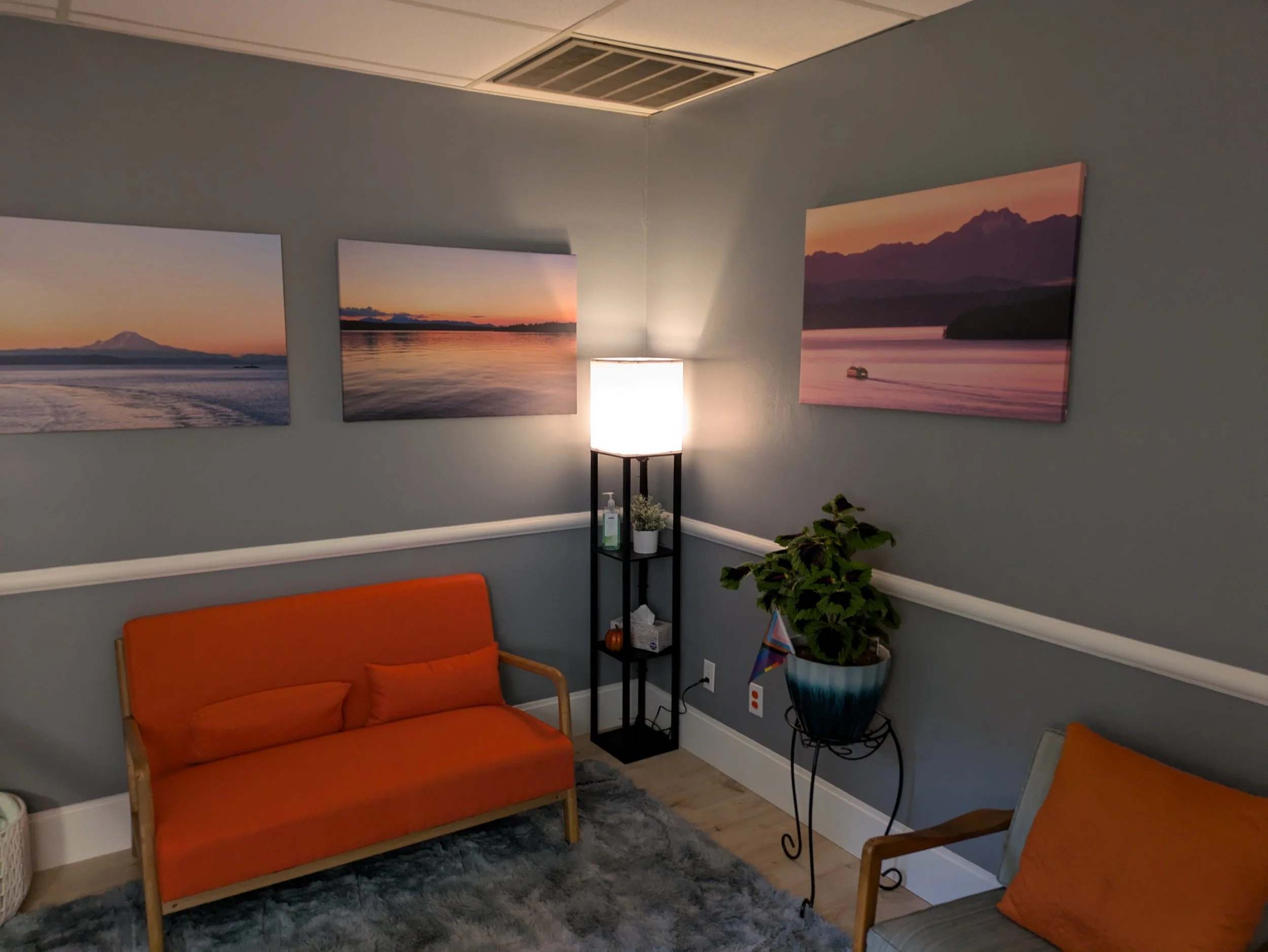
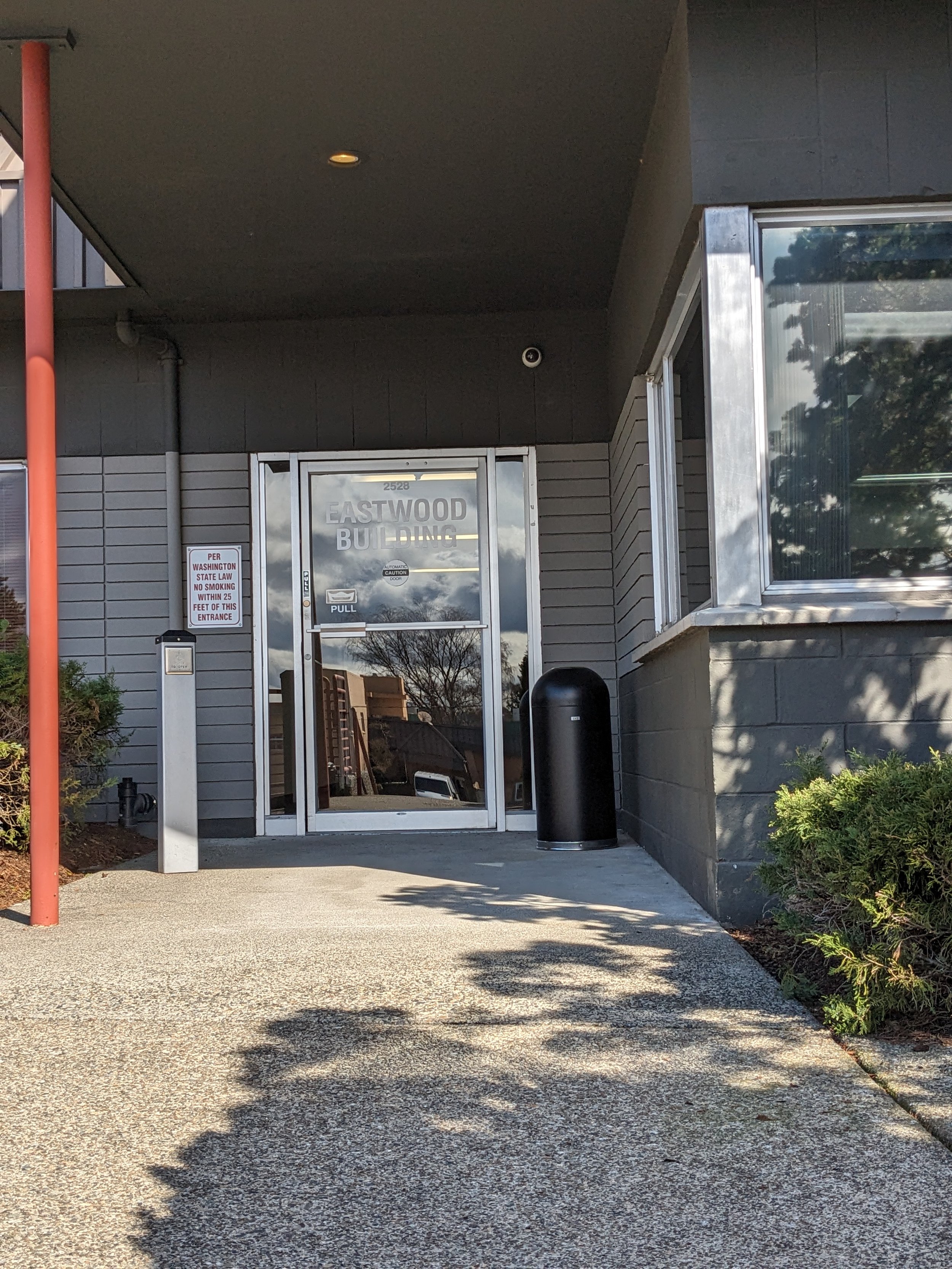
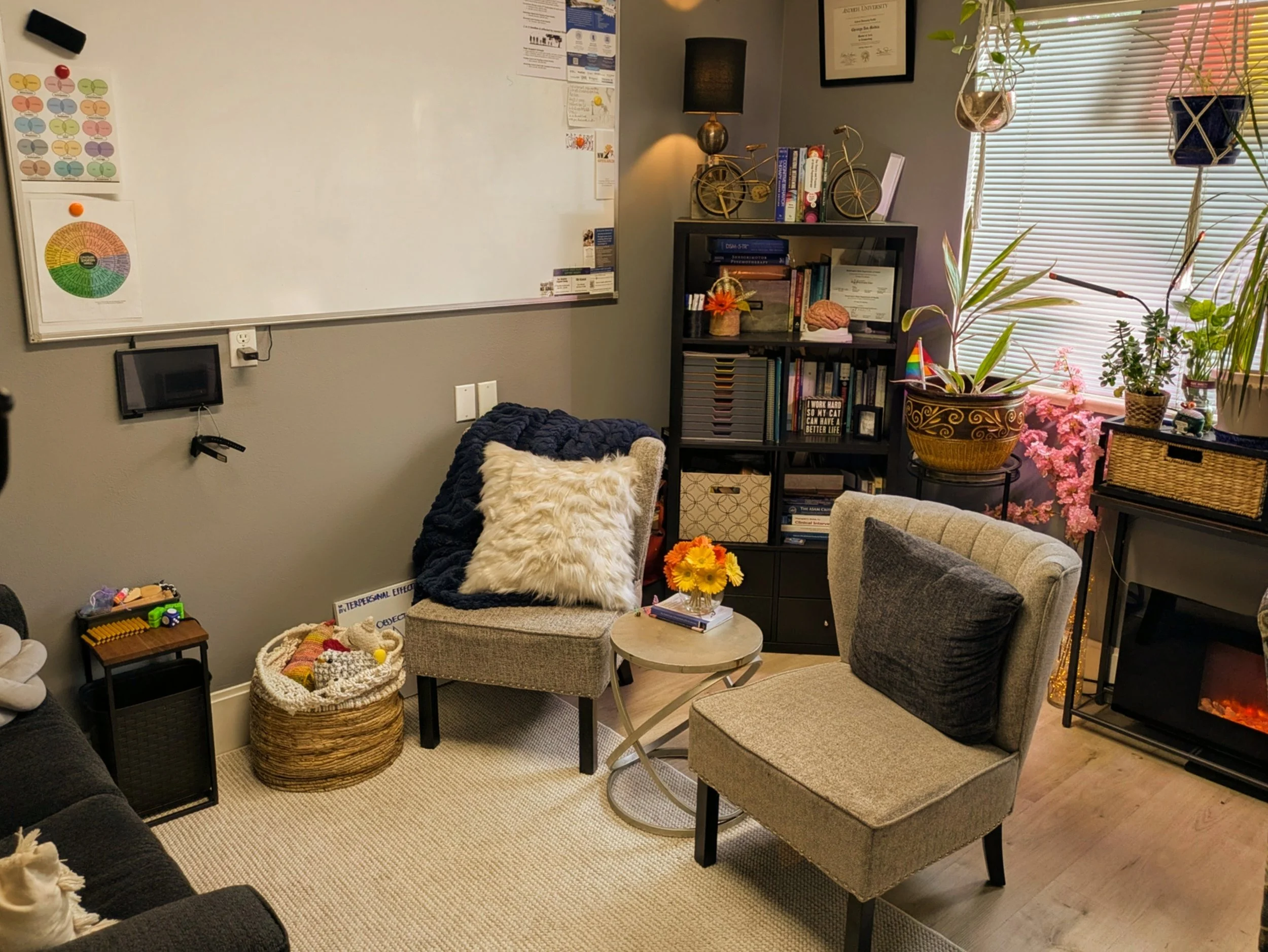
I am a licensed therapist and Substance Use Disorder Professional providing psychotherapy to adults in Washington State.
I participate in ongoing consultation and continuing education to support ethical, informed care.